
Production Context
Apocalipsis Z: Nuevo Mundo (Apocalypse Z: New World) is the sequel to Apocalipsis Z: El principio del fin, which Amazon described as the most-watched international Original film in Prime Video's history. Directed again by Carles Torrens, written by Ángel Agudo and produced by Nostromo Pictures for Prime Video, it premiered at the Sitges Film Festival and was released worldwide on 30 October 2026.
The story moves to the Canary Islands, now Europe's last refuge from the TSJ virus. If the first film was about everyday technology witnessing the collapse, the sequel takes place after it. Our challenge was not to imagine the technology of the future, but to design the screens that could survive the end of the old one.
As on the first film, our studio designed and animated the film's screen graphics, together with its narrative intertitles.
What We Designed
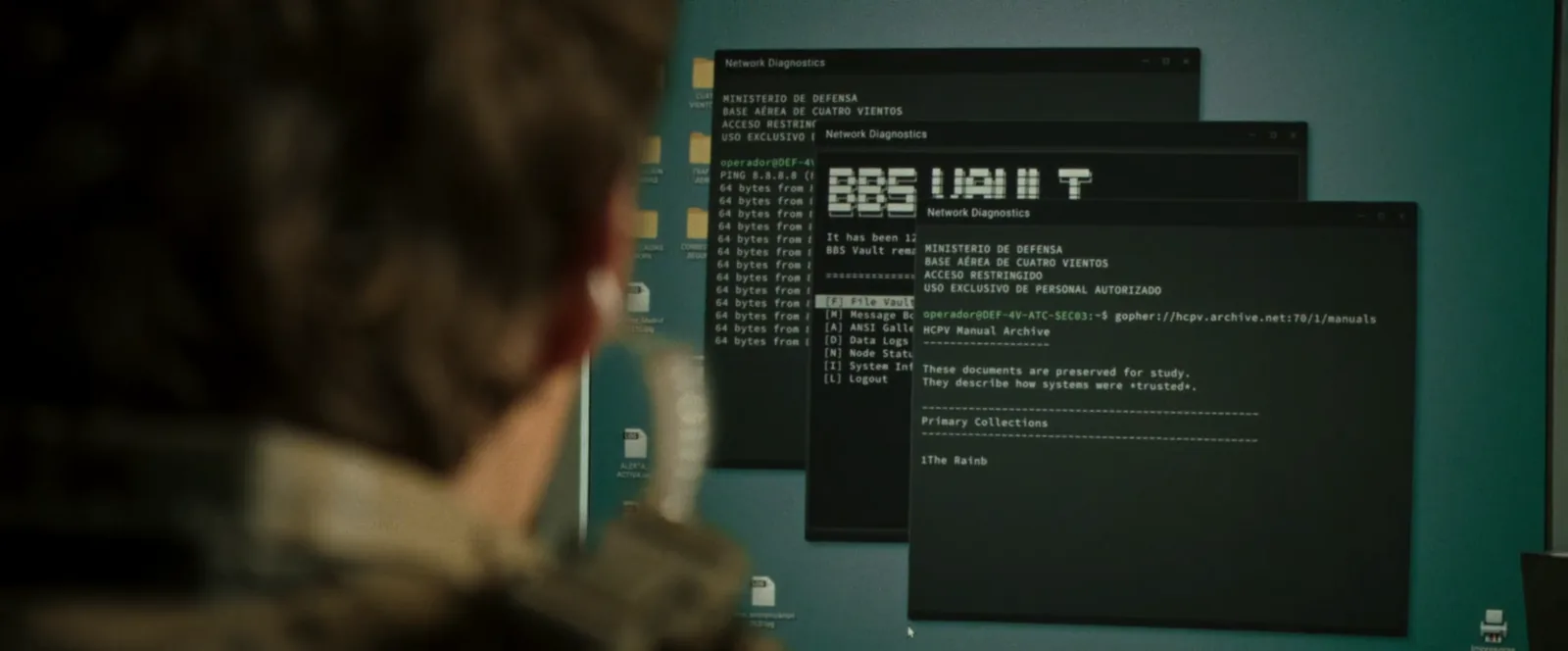
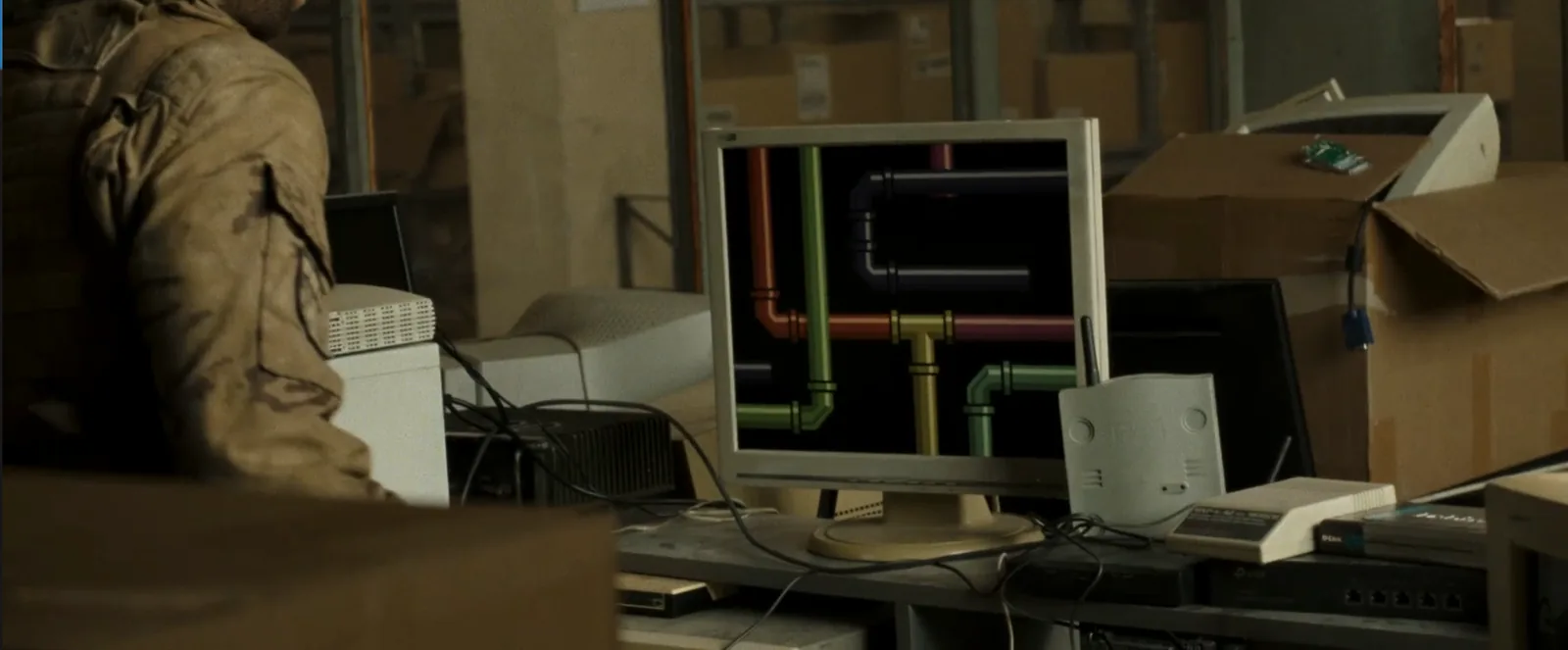
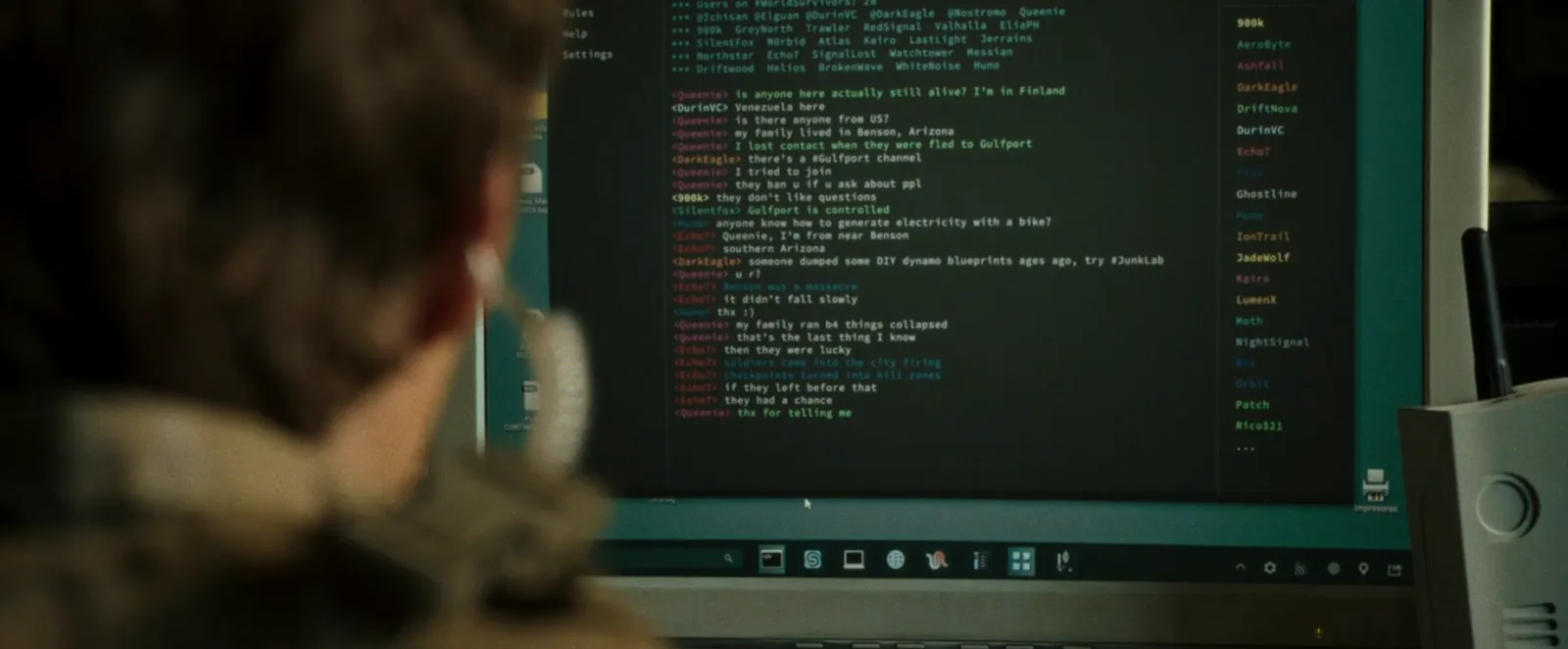
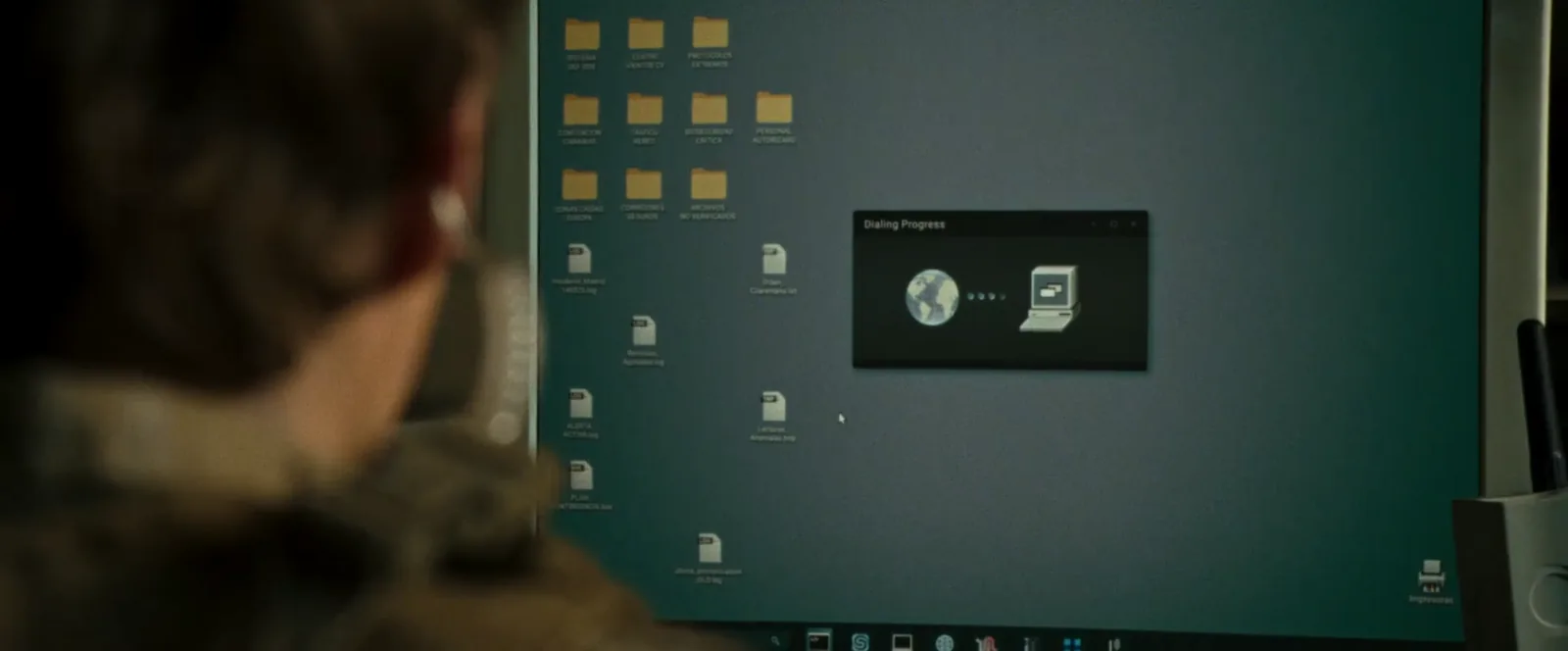
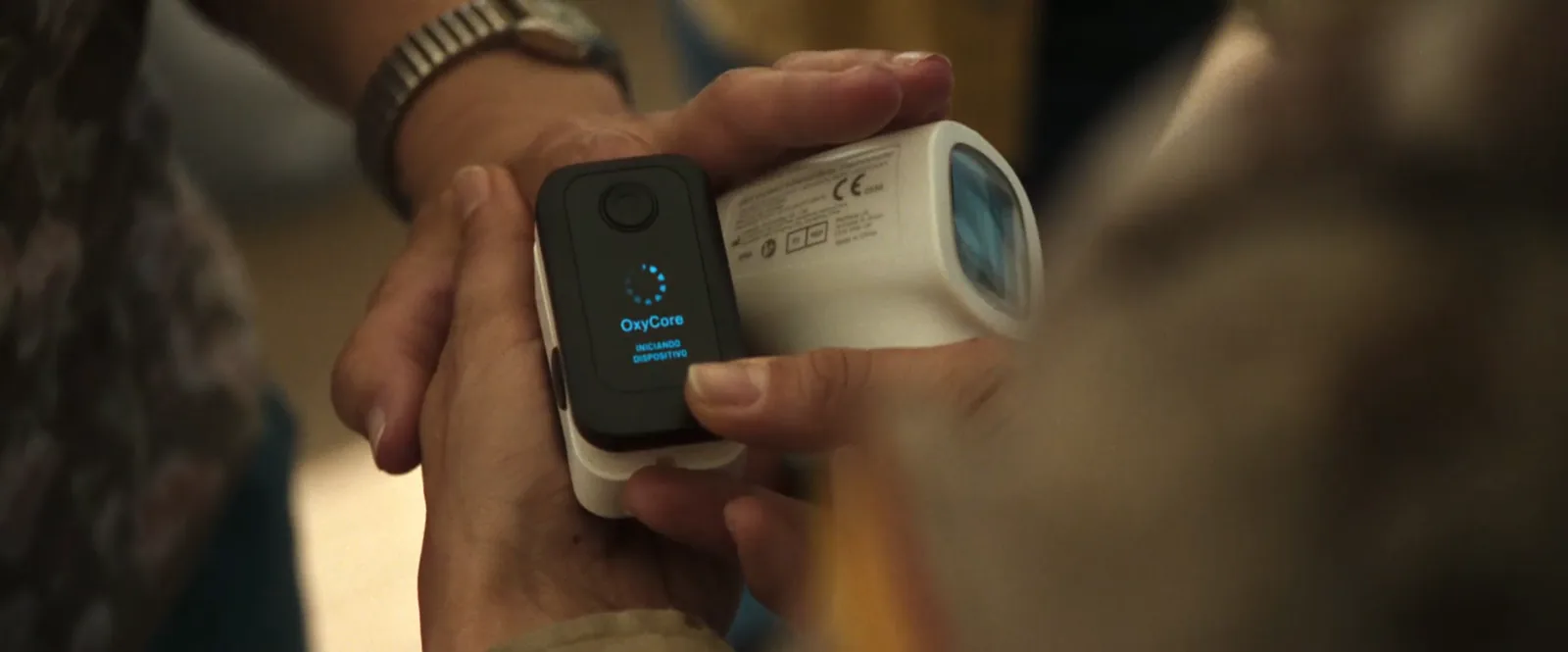
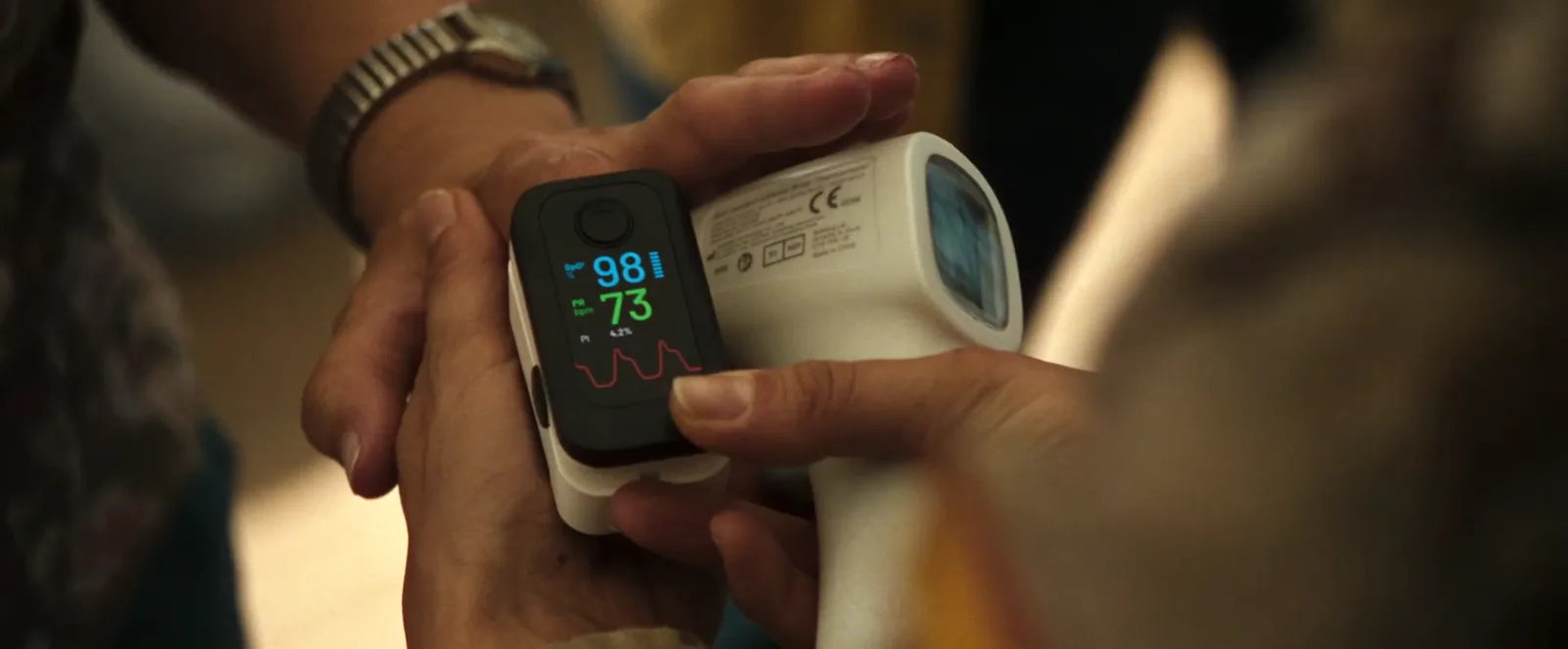
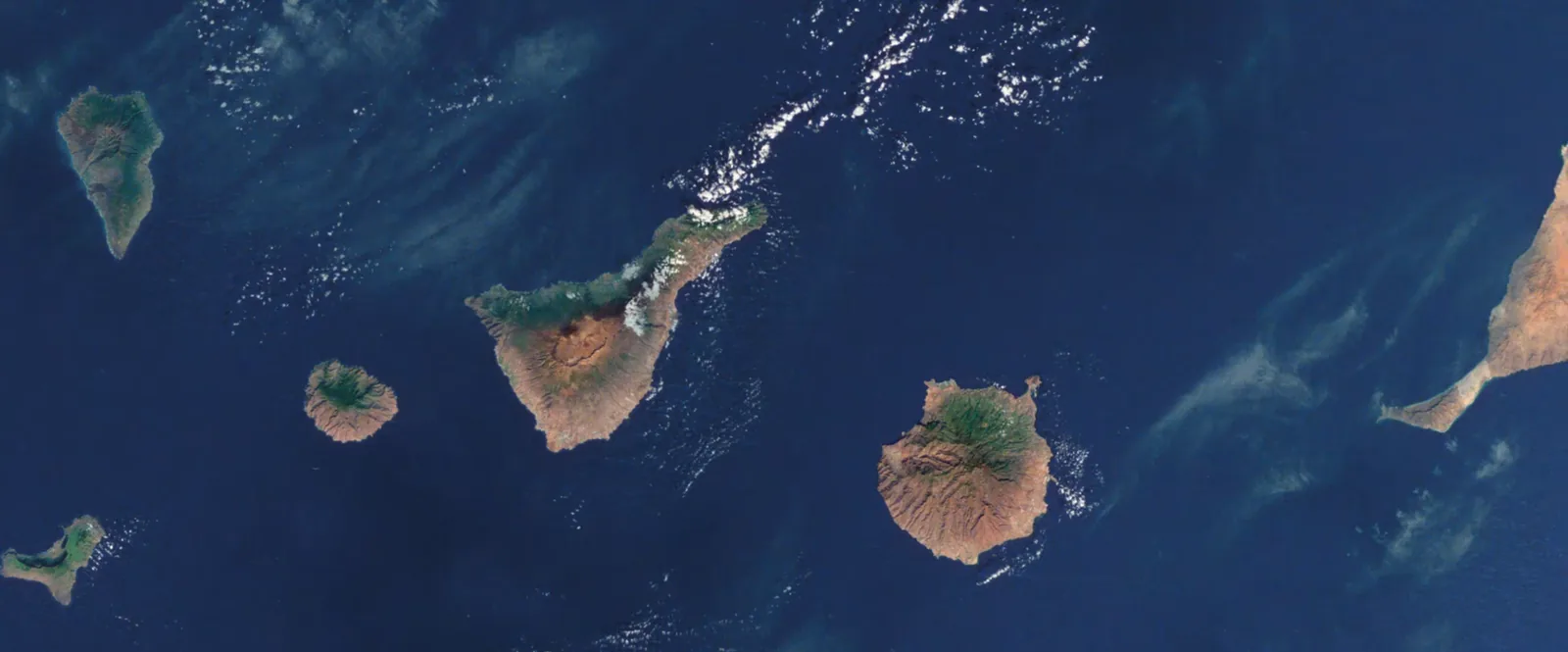
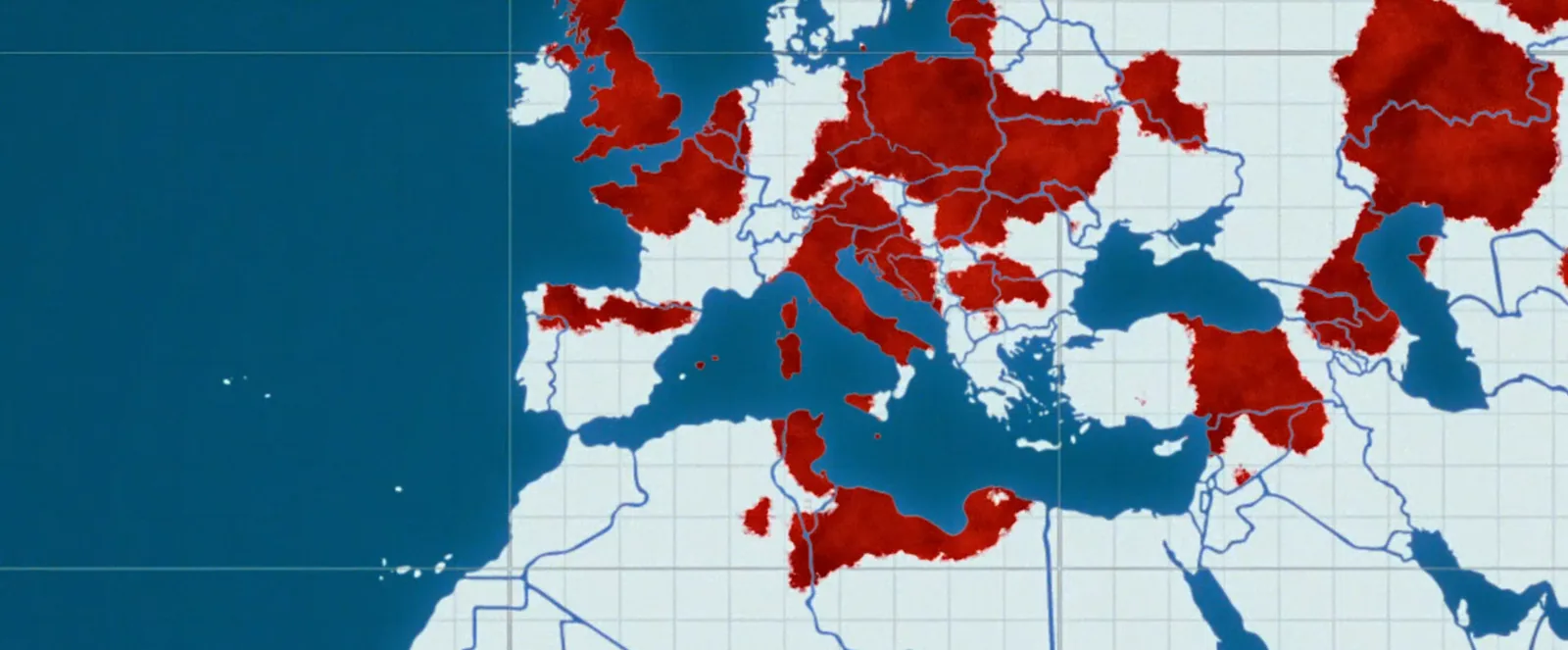
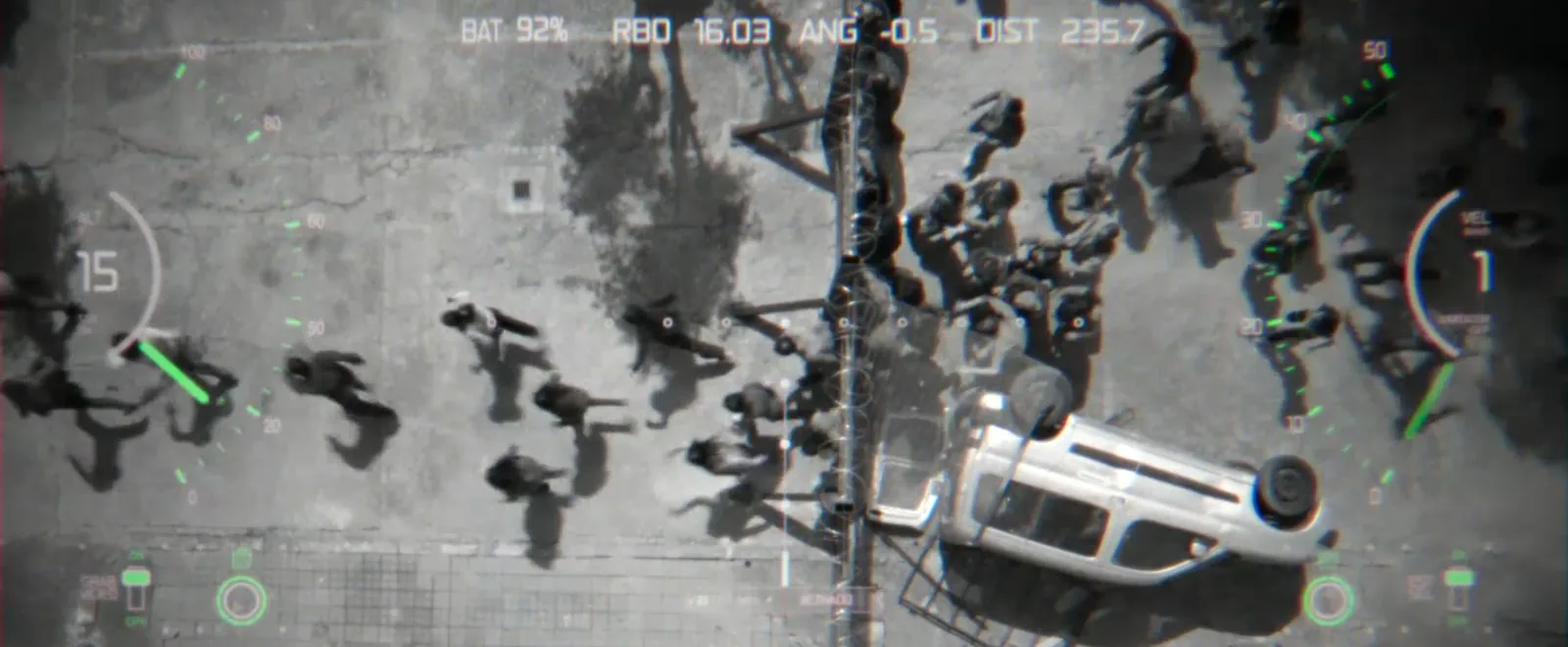
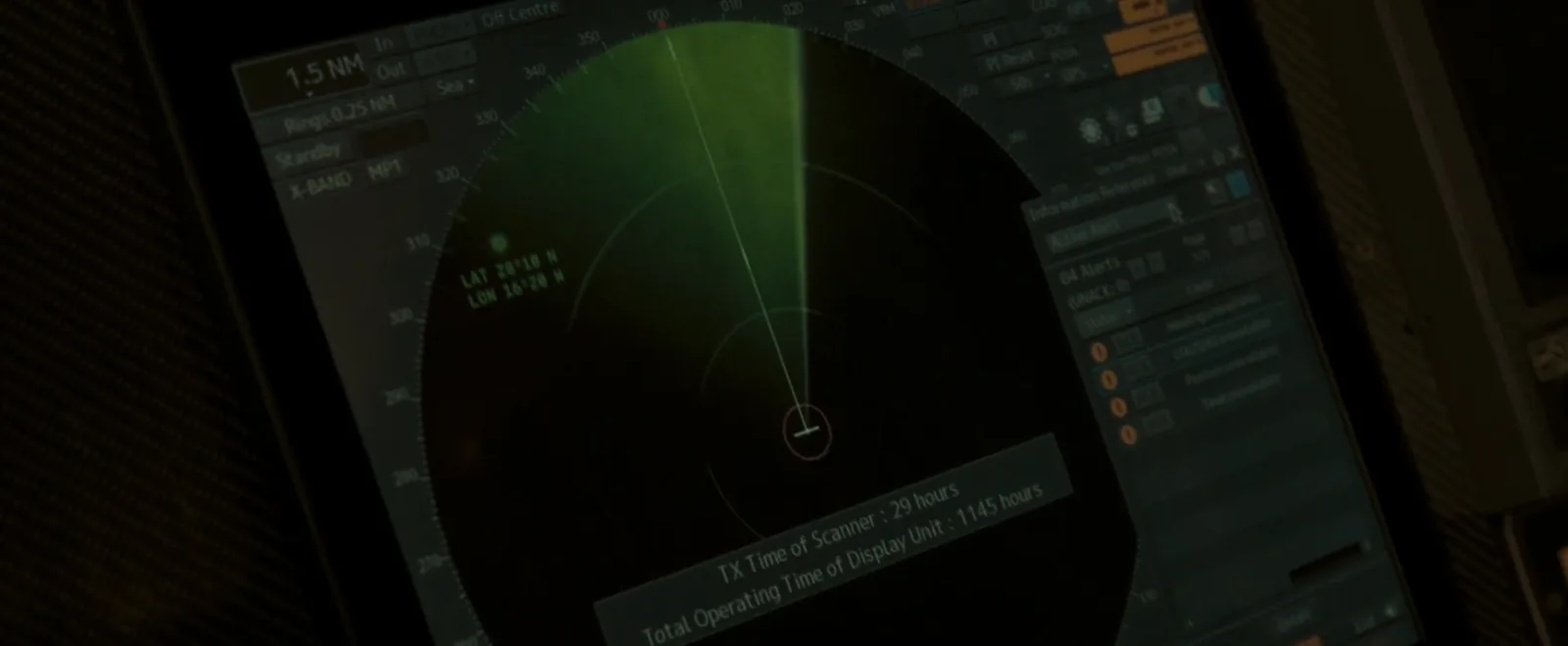
The work covered the whole range of the film's technology: phone pop-ups and incoming calls, news lower thirds, a ship's navigation radar and a drone camera HUD that returns across several full-frame shots. For the military base we built a complete Linux desktop — terminal, BBS, Gopher archive and IRC client — along with a retro pipes screensaver and emails. Medical screens included a pulse oximeter display. Beyond screens, we created a full-frame satellite shot of the Canary Islands, an infographic map of the infection spreading across Europe, and the film's intertitles.
Technology Built to Survive: Designing Believable Post-Apocalyptic Screens
In a world where infrastructure has collapsed, technology is no longer about innovation. It's about reliability. Torrens wanted the computing world of the film to feel retro: the military doesn't run the latest consumer software, but robust, older systems that keep working when everything else has failed. Every interface had to look like something that could still be switched on.
The base computers run a Linux desktop with its own icons, file system and windows — folders for containment protocols, air traffic, quarantine orders and contingency plans. From that desktop, the characters dial out through a terminal and reach the remains of the network: an old BBS still online, a Gopher archive, and an IRC server where survivors from around the world gather in city channels — #Madrid, #Vigo, #Gibraltar, #WorldSurvivors — most of them silent for months.
The screenwriter, Ángel Agudo, knows this kind of technology first-hand. He helped us get the details of Telnet and Gopher right — what a connection looks like, what a terminal would really show — so that anyone familiar with these systems would recognise them. Having the writer involved at that level of detail is rare, and it shows on screen.
Medical Screen Graphics: Small Screen, High Stakes
On paper, a pulse oximeter is two numbers — blood oxygen saturation and pulse rate — and a waveform. In the film, it sits at the centre of a tense scene, and that tension depends on how those numbers move.
Working closely with Carles Torrens, we refined the display to balance medical plausibility, on-camera readability and the dramatic timing of the scene: every value and every animation beat had to build the moment without giving anything away too early. We checked the readings with a doctor, so they would stay credible to anyone who has used a real oximeter.
It is a good example of something we see on every production: the hardest screens are not always the most complex ones, but the ones that carry a dramatic decision.
Beyond Screens: The Canary Islands from Space
One of the most demanding pieces wasn't a screen at all, but a full-frame shot: the Canary Islands seen from orbit. We built it as a composite of satellite imagery — but satellite images are static, and a still archipelago reads as a photograph, not as a living place.
We separated the composite into layers and animated the clouds by hand in After Effects, in a deliberately old-school way, so the islands would breathe without drawing attention to the technique.
Drone HUD and Ship Radar
The drone camera appears several times, often filling the entire frame. A HUD like this is easy to fill with decorative numbers — and just as easy for an attentive viewer to catch out. So we calculated the data for each shot: altitude changes as the camera goes higher or lower, and speed and geolocation coordinates stay consistent from shot to shot.
The same discipline applied to the ship's navigation radar, designed as professional maritime software with its own controls, scan parameters and a GPS position set in Canary Island waters.
Intertitles: Military Precision, Without the Sci-Fi Clichés
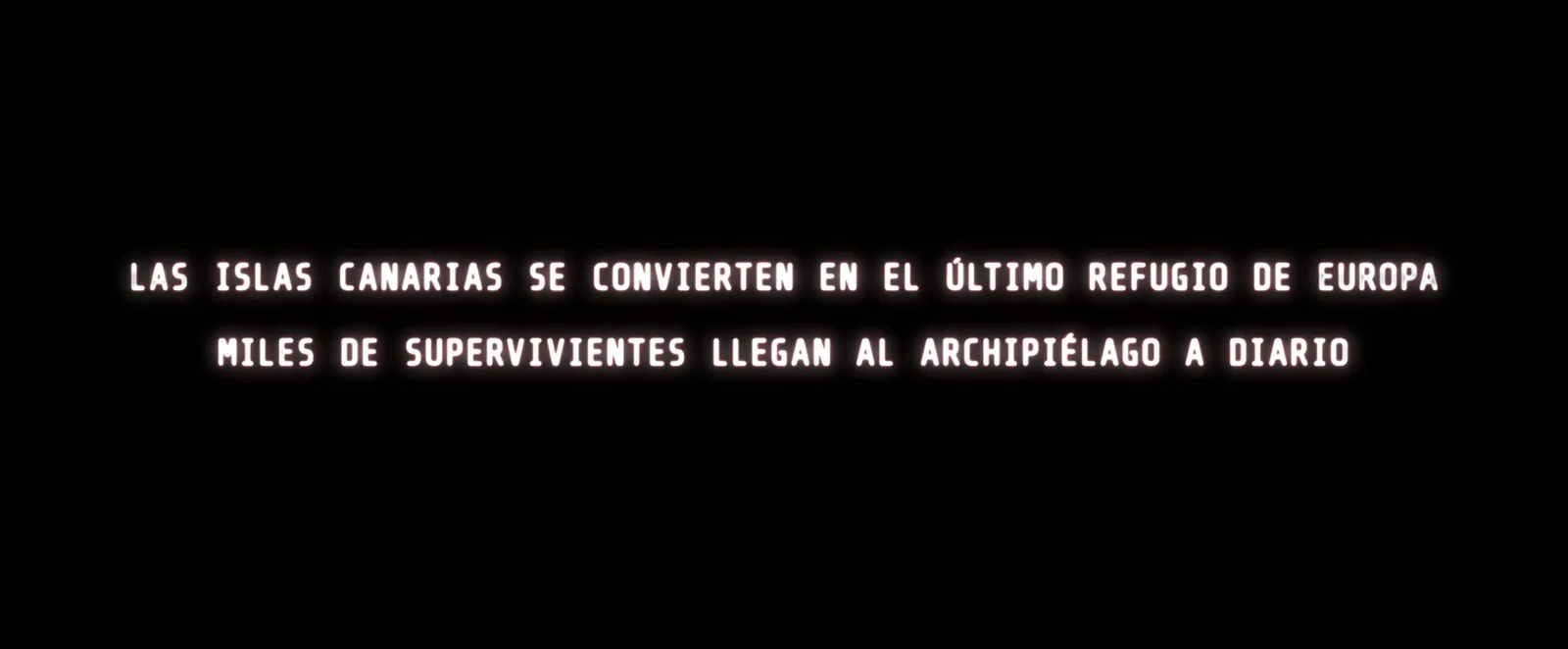
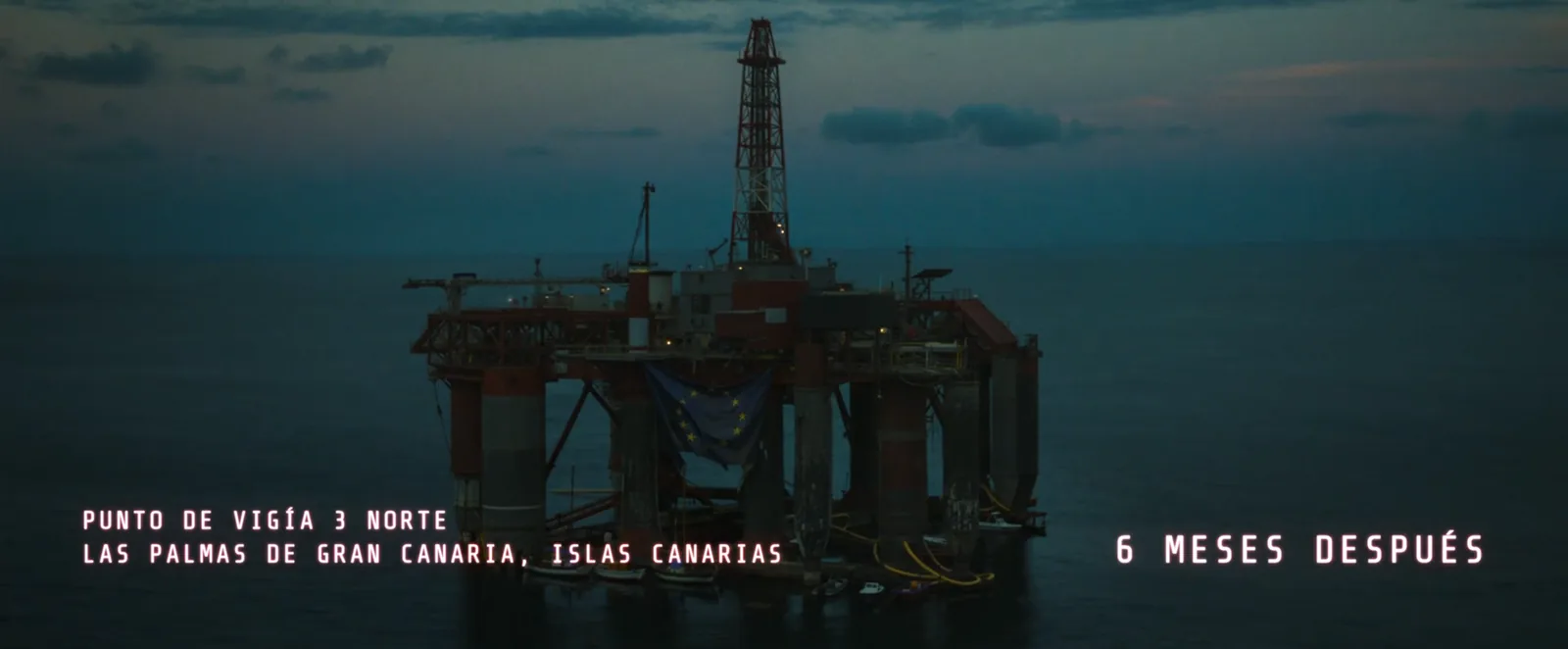
The film uses intertitles to set the context between sequences. We spent a good amount of time on their typography: slab or sans, how they behave over black and over image, and which treatment gives them a technical, military tone without falling into futuristic clichés.
They also had to have personality without competing with the film's main titles. Titles are a growing part of our work: we later designed the credits and overlays for Cronos, also produced by Nostromo Pictures.
Working with the Director
On both Apocalipsis Z films we worked hand in hand with Carles Torrens. Many screen decisions are really directing decisions: what the audience is allowed to read, when a number changes, how much a screen reveals about where the plot is going. Being able to discuss those choices directly with the director — and having the editorial team send us shots quickly whenever we needed them — is what makes this kind of work precise.
From Everyday Screens to Survival Systems
The first film was built on the screens of normal life: news channels, apps, emergency alerts. Nuevo Mundo shows what remains when that layer disappears — radar, drones, terminals and survivors typing into old chat channels. Designing both films let us tell the same collapse twice, through the technology people are left with.